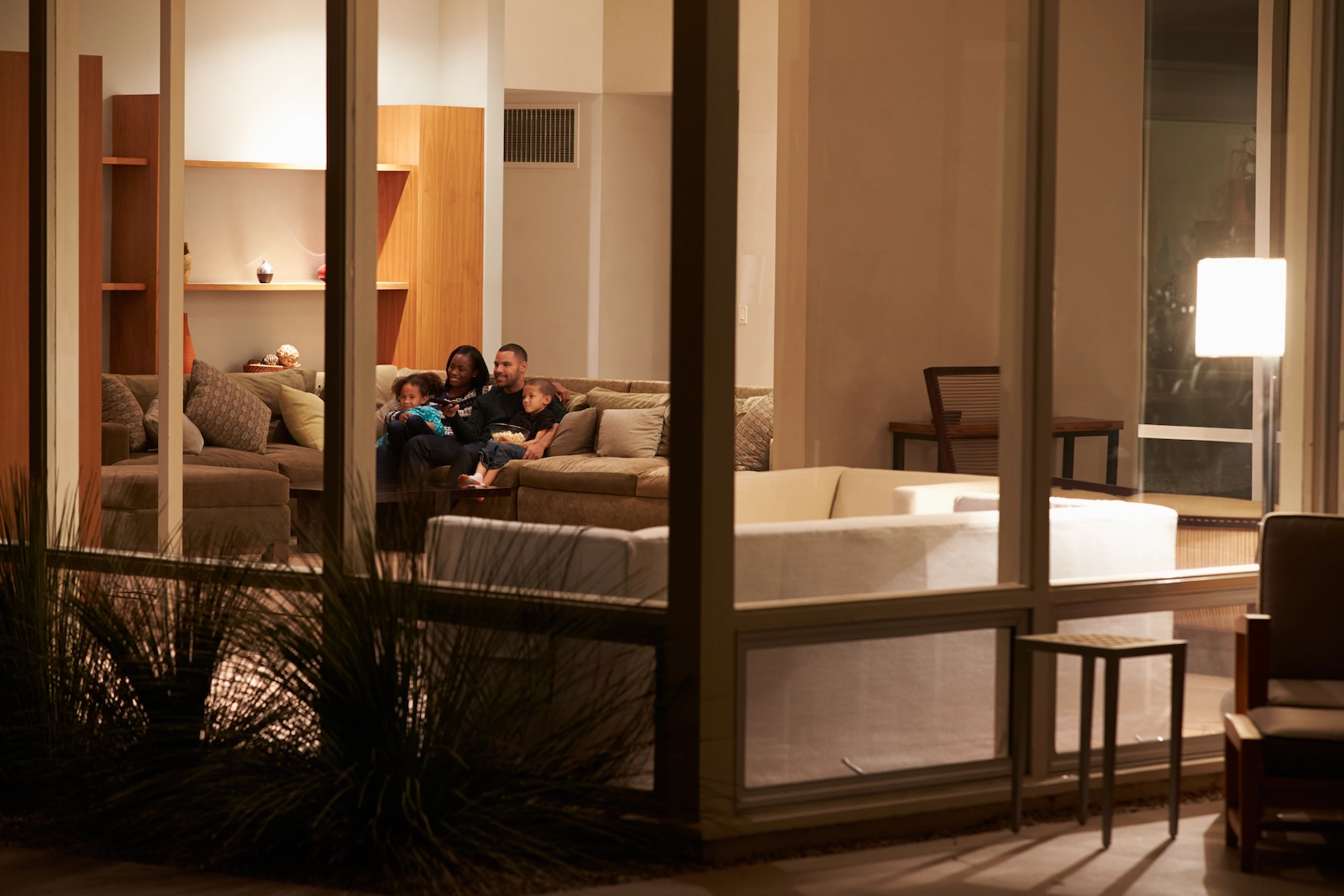
Your air is a mechanical problem.
It has mechanical fixes. Ductwork, sealing, filtration, ventilation, humidity. We measure your home first so you buy the one or two your house actually needs, instead of all five.
Priced to your home on a short call, and credited toward any recommended upgrade. · 818-237-3404
Five things that actually change what you breathe.
Not one of these is a gadget. They are mechanical changes to the system that moves air through your house, and each one solves a different problem. Which is why guessing between them is expensive.
New ductwork
When the runs are undersized, crushed, or routed badly, no equipment upstream can fix it. Replacement or reconfiguration, designed for right sized airflow and fabricated before we arrive.
Duct sealing and cleaning
Leaky returns pull attic air, insulation fiber, and whatever else is up there into the rooms where you sleep. Sealing recovers capacity you already paid for.
Whole home filtration
A 4 inch MERV 13 rack, deep enough to catch wildfire smoke particles without strangling airflow the way a 1 inch filter does when you upgrade it blindly.
Balanced ventilation
An ERV brings filtered outdoor air in and pushes stale air out, without throwing away the heating and cooling you already paid for. Opening a window is not a ventilation strategy in Los Angeles.
Humidity control
Steam or evaporative, properly controlled. Never ultrasonic, which aerosolizes whatever is in the water and puts it in your air.
Monitoring and automation
Sensors in the rooms that matter, so the system responds to your actual air instead of a thermostat schedule. This is the part that keeps working after we leave.
What gets measured.
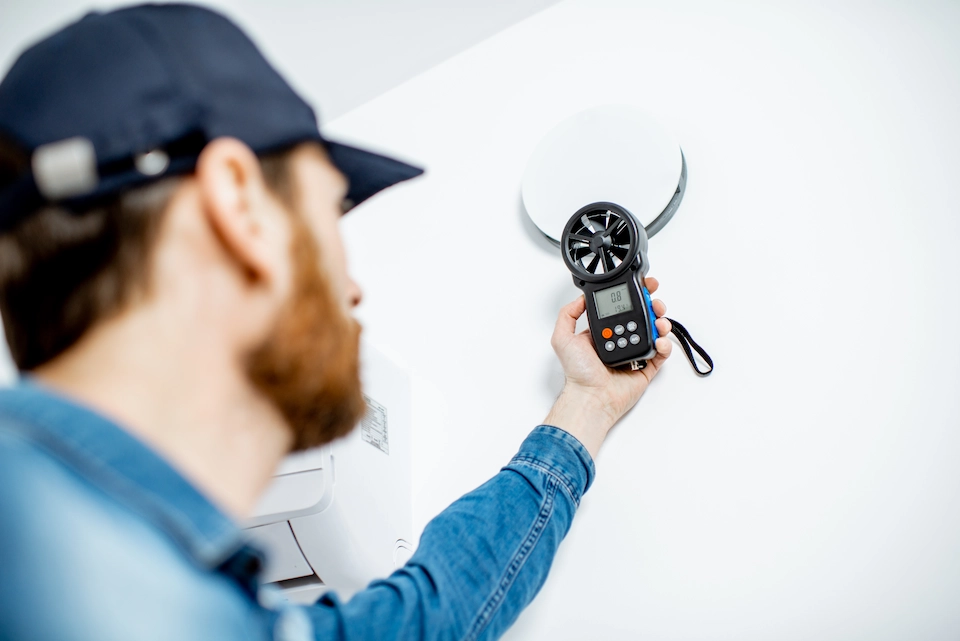
On calibrated instruments, room by room, not a single reading taken standing in the hallway. The readings are what separate the upgrade you need from the four you do not.
You get the readings and a prioritized plan before we leave. Not a sales appointment scheduled for later in the week.
The smoke does not stop at the property line.
Researchers at Harvard's Healthy Buildings program monitored indoor air across greater Los Angeles before and during the January 2025 fires. Homes more than two miles from any burn zone showed clear increases in indoor PM2.5, above the 35 micrograms per cubic meter threshold.
Distance from the fire did not predict what people were breathing indoors. What their house did with outside air predicted it.

Measure first. It is cheaper than guessing.
A filtration upgrade is fifteen hundred to four thousand dollars. Ductwork is four to seven. Buying the wrong one costs more than the assessment does, several times over, and you still have the original problem.
What we fix, and what we hand to someone else.
We are a mechanical contractor. Some of what makes a house feel wrong is not mechanical, and we would rather tell you that on day one than take your money and discover it together. If the readings point somewhere outside this list, you get the data, a plain explanation, and a referral to the right specialist.
We fix this
We refer this out
Radon is the one on both lists. We measure it as part of the assessment and explain the result. Mitigation, if you need it, goes to a certified mitigator. More on radon testing.
Licensed, insured, and accountable after the truck leaves.
Clean Building Solutions, C-20 HVAC contractor, CSLB #1153130. Serving greater Los Angeles within fifty miles of Woodland Hills.
Request your assessment.
No payment, no account, no commitment. We confirm by phone and find a time that works.
Got it.
We will call to confirm a time, usually the same business day. If you would rather just talk it through now, call or text 818-237-3404.
Before you book.
What does the assessment cost?
It depends on the size of the home and what you want measured, so Bryan scopes it with you on a short call and gives you the price before anything is booked. The fee is credited toward any recommended mechanical upgrade. It takes roughly 90 minutes and you get the readings and a prioritized plan before we leave.
What exactly do you measure?
Fine particles (PM2.5), VOCs, CO2, NO2, and humidity on calibrated instruments, room by room. On the mechanical side, static pressure, airflow, and refrigerant performance on MeasureQuick instrumentation. Measured, not estimated.
Do I have to buy anything after the assessment?
No. You get the readings and the plan either way. Plenty of the homes we assess need one upgrade rather than five, and being able to say so is the entire reason for measuring first.
What if the problem is something you do not fix?
We tell you, and we hand you to someone who does. Mold remediation, asbestos and lead abatement, soil or sewer gas intrusion, structural water damage, and pest work are outside our scope. We are a mechanical contractor, and knowing where our expertise ends is part of doing this properly.
Is an air purifier not enough?
A portable purifier cleans the room it is standing in, which is genuinely useful and also the whole limit of it. If your ducts are pulling attic air into the bedrooms, a purifier is filtering the symptom while the cause runs all night. That is what measurement sorts out.
My system is old. Should I just replace it first?
Often, yes. If the equipment is past twenty years or failing, the upgrades above are better designed into a replacement than bolted onto a system on its way out. Start with a replacement price and the air work gets scoped into it.
Do you serve my area?
Greater Los Angeles within fifty miles of Woodland Hills: the San Fernando Valley, Conejo Valley, Santa Clarita, Simi Valley, Camarillo, the Westside, Beverly Hills, Santa Monica, Malibu, Pasadena, Glendale, Burbank, Culver City, and the South Bay. On the edge of that range, ask anyway and we will confirm by phone.
Where can I read more before deciding?
The Baseline Air and Health Reference covers ten pollutants, what they do, and where they come from. No email required.
Measure first.
Then fix the right thing.
If your system is also near the end of its life, start there instead. The air work is cheaper and better when it is designed into a replacement rather than added to one.
Get a replacement price